

Middle East & North Africa
The Gulf states, North Africa, and the sovereign capital flows reshaping energy, infrastructure, and financial services. Kaelo's headquarters. The world's most consequential capital deployment corridor.
The World's Most Consequential Capital Corridor
GCC GDP exceeds $2 trillion. Saudi Arabia's non-oil GDP now accounts for over 50% of total output — the structural diversification that Vision 2030 was designed to achieve is no longer aspirational, it is measurable. The UAE's population has grown 15% since 2020. Qatar's LNG expansion will double export capacity by 2030. Bahrain, Oman, and Kuwait are each executing their own transformation programmes — smaller in absolute scale but no less consequential for the enterprises and institutions operating within them.
The aggregate sovereign wealth capital deployed from the Gulf now exceeds $3.5 trillion in assets under management — more than the GDP of the United Kingdom. PIF has transformed from a domestic holding company into a global investment platform. Mubadala operates across technology, aerospace, energy, and healthcare with direct control positions. ADIA remains the archetype of patient, diversified, long-duration capital allocation. QIA has built one of the world's most concentrated high-conviction portfolios. Together, these institutions are not merely allocating capital — they are reshaping the global investment landscape.
North Africa adds a further dimension: Egypt's $400 billion GDP and the New Administrative Capital programme, Morocco's automotive and aerospace manufacturing cluster (Renault, Boeing, Bombardier), and Tunisia's technology talent pool each present distinct investment corridors that connect the Gulf's capital surplus with Africa's growth trajectory. The MENA region is not a single market — it is a constellation of distinct economies linked by sovereign ambition, geographic proximity, and the capital flows that Kaelo exists to advise on.
Investment Landscape
Dubai transaction values reached record levels in 2025. Saudi Arabia has 30,000+ ultra-luxury hotel keys under development across Amaala, Red Sea Global, Diriyah Gate, NEOM Sindalah, and Qiddiya. Egypt's New Administrative Capital and Oman's Muscat Bay add further pipeline. PIF is the world's largest single investor in greenfield luxury hospitality.
NEOM ($500B), The Line, Lusail City ($45B), KAFD. Saudi $147B aviation programme. UAE's Al Dhafra solar (world's largest single-site at 2GW). Oman's $8.4B green hydrogen. Qatar North Field expansion doubling LNG capacity. The infrastructure pipeline across MENA exceeds anything attempted since post-war reconstruction.
DIFC hosts 4,500+ registered entities. ADGM has emerged as a fintech and digital assets hub. QFC provides a common law platform within Qatar. Saudi's KAFD positions Riyadh as a regional financial centre. FAB ($330B+ assets), QNB ($370B), and Emirates NBD are expanding into global banking. Gulf IPO pipeline (Tadawul, ADX) is the most active in emerging markets.
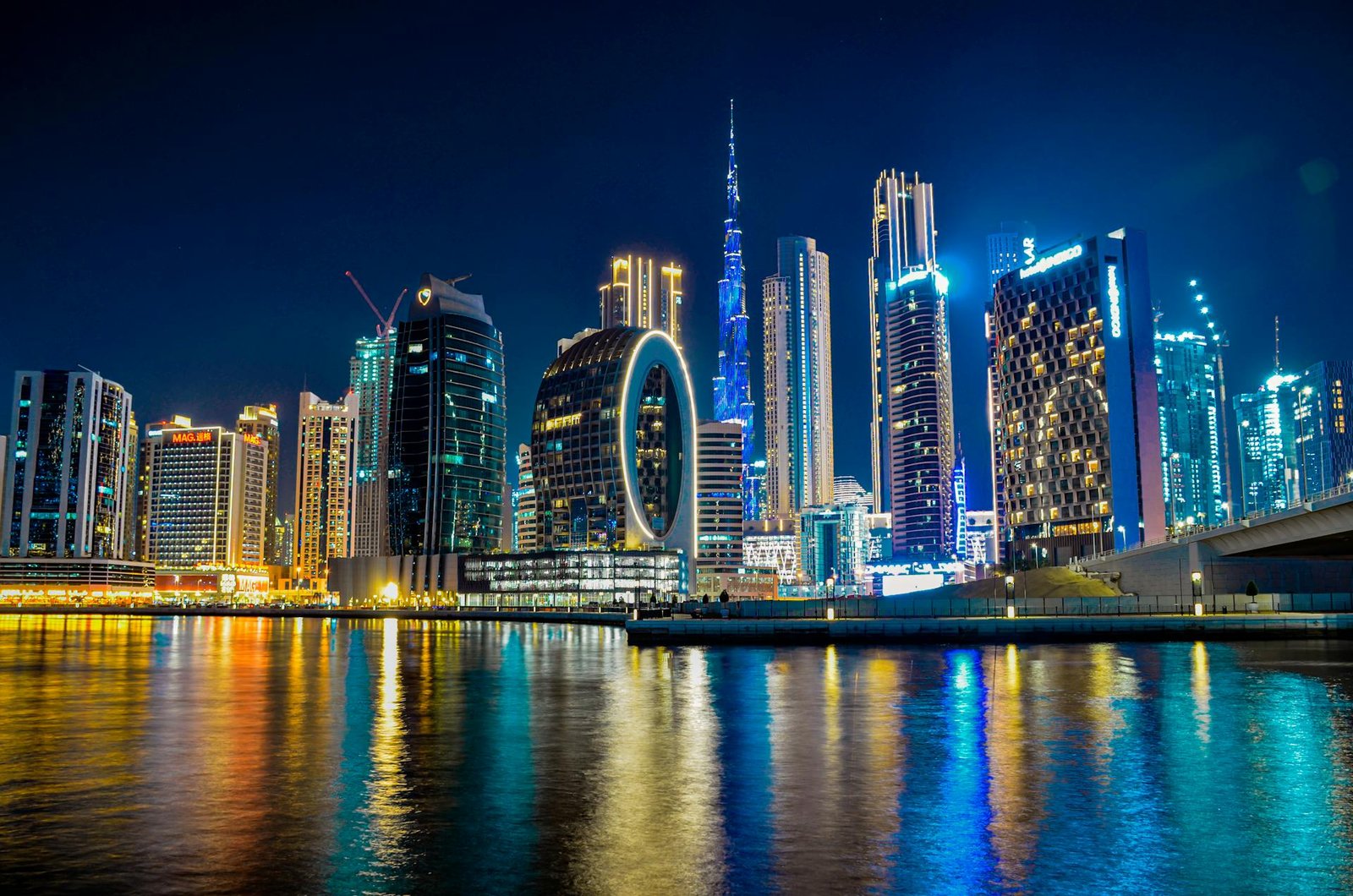
Why Dubai. Why DIFC.
Dubai is the only city on earth that maintains deep commercial relationships with Washington, Beijing, Moscow, and Riyadh simultaneously. This is not a diplomatic accident — it is a structural feature of the UAE's foreign policy and Dubai's commercial architecture that makes it the natural headquarters for any firm advising on cross-border capital flows along the South-South axes that will define the next decade of global investment.
The DIFC provides the legal infrastructure that makes this positioning operational: a common law jurisdiction with English-language courts, independent financial regulation through the DFSA, and a regulatory framework that has earned the trust of international institutional investors. When we structure a sukuk, advise on a PPP, or facilitate a cross-border commodity transaction, the DIFC's legal certainty is not a convenience — it is the foundation on which every transaction stands.
Kaelo's Dubai headquarters is not a flag-planting exercise. It is the operational centre from which we access the region's sovereign wealth capital, regulatory relationships, and deal flow — and from which we connect that capital to opportunities across Southeast Asia, Sub-Saharan Africa, and the Indian Ocean corridor. Our team in Dubai advises across every sector we cover, with the cultural fluency and institutional relationships that only come from building a practice here, not merely visiting.
Regulatory Frameworks
Common law · DFSA · 4,500+ entities · The institutional standard
Common law · FSRA · FinTech & digital assets hub
Common law · 10% CIT · Regional treasury & holding
Saudi capital district · CMA regulated · Riyadh positioning
"MENA is not a market we serve from a distance. It is the market in which we are built, from which we operate, and through which we connect the capital, commerce, and counsel that define our practice. Every mandate we execute globally begins with the relationships, regulatory standing, and operational intelligence we have developed here."
Our Markets
Our headquarters. Our home market.
Dubai — the operational centre of Kaelo Global.