
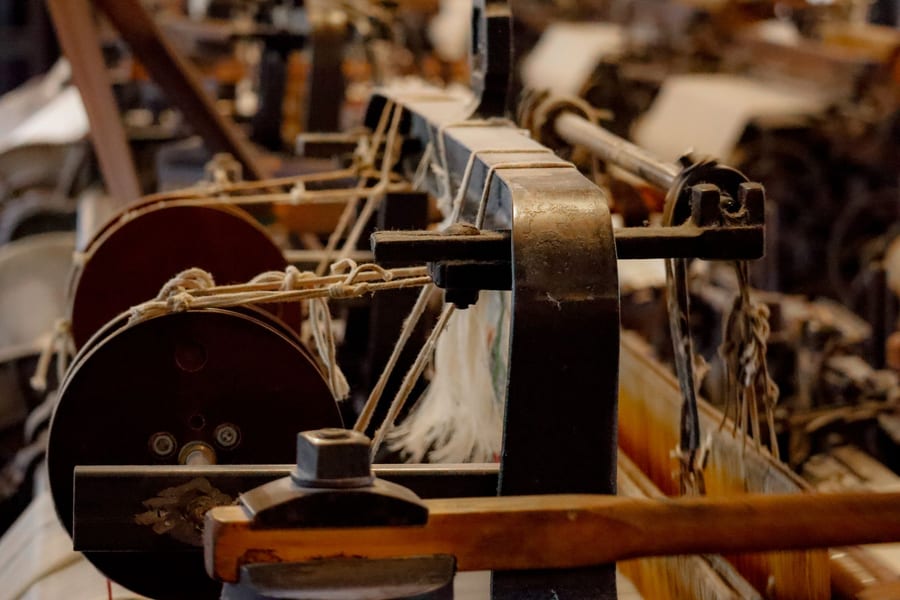
We buy cloth from mills in India, Indonesia, Japan and Malaysia. The trade is older than every other activity in this house, and it is likely to outlast most of them.
Why more than one origin
Buying from a single country is simpler. The paperwork is one set, the relationships are in one language, and the travel is straightforward. We buy from four because the last three decades have offered regular reminders of what concentration costs, from currency crises to floods to a pandemic that closed borders. A supply chain that depends on one country is one event away from being a much smaller business, and the event always arrives at the worst possible moment.
The alternative is not glamorous. It means keeping relationships warm in places you are not currently buying from, which costs money and attention in the years when nothing goes wrong. That is exactly why most businesses stop doing it.
What it costs
Buying across four origins is more expensive per unit than buying from one. Trims and finishing have to be arranged in each place. Relationships have to be maintained in several languages. Quality standards have to be applied consistently across different working cultures, which is harder than it sounds, because the same written specification is read differently in different places. Somebody has to travel, and that somebody has to be senior enough to make decisions on the floor.
What it protects
What you buy with all of that is the ability to move an order within a season rather than across one. When a source is disrupted, whether by politics, customs, energy prices or weather, volume can shift to a mill that already knows your specification and your standards. The cloth may cost more and the delivery may move by a few weeks, and the season is not lost.
It is worth being honest about the limits. Spreading your buying protects against a problem in one country. It does not protect against a problem in the freight itself, and when shipping capacity tightens everywhere at once, every origin is affected together. Nothing in a supply chain removes risk. The work is deciding which risks you would rather carry, and being able to explain that choice to a customer whose delivery date depends on it.
The habits that travel
The habits that hold the trade together, meaning long supplier relationships, cautious stock levels, written quality standards and terms agreed before production, are the habits the rest of this business now works by. The consultancy borrowed them, the marketing practice borrowed them, and our own label inherited them as the starting point rather than an ambition.
That is not nostalgia. A trade that has run through several cycles teaches a company how to behave when conditions turn, and that knowledge is difficult to acquire any other way and easy to lose in one good year.
For a buyer weighing this for the first time, the practical starting point is modest. Place a second, smaller order somewhere else before you need to, and accept that it will cost more and teach you something. A relationship you have never tested is not a second source. It is a phone number.