Manufacturing Facilities
Nine facilities across five Asian markets — Indonesia, Japan, Malaysia, India, China.
What this service is
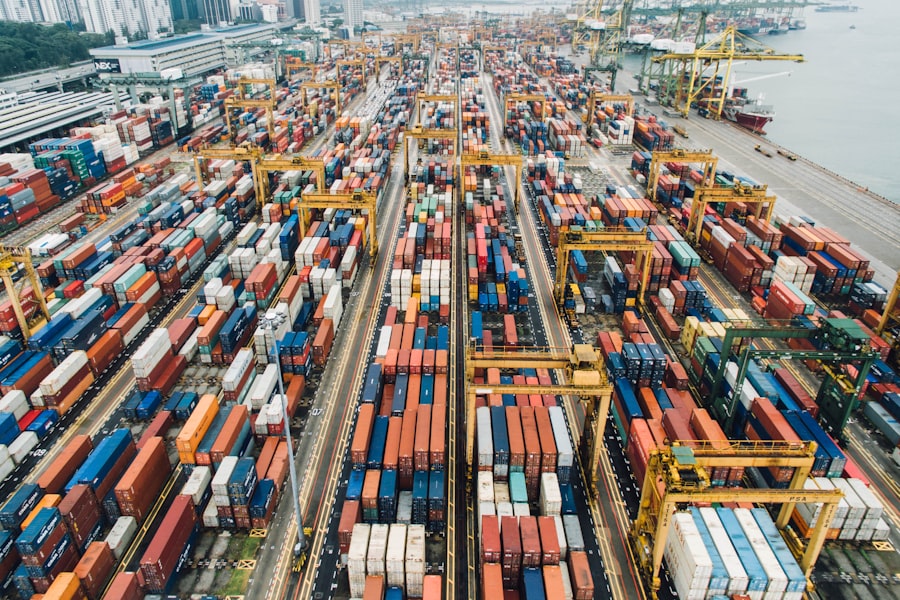
Kaelo Textiles & Garments operates nine manufacturing facilities distributed deliberately across five countries. The structural choice is the headline: distributed manufacturing costs more per unit, but it produces a platform that can reallocate inside one season when any single source is disrupted. Each country plays a specific role in the footprint — capability mix, capacity, lead-time, and category specialism are documented per facility.
“Nine factories across five countries is more expensive than one factory in one country. We have been paying that premium for thirty-six years because we have seen what happens to the alternative.”
— A Kaelo Textiles & Garments principal
What we are accountable for
Where the work lands.
-
01
Five-country footprint
Indonesia, Japan, Malaysia, India, China. Each country selected for a capability the others do not duplicate.
-
02
Nine facilities, one operating standard
Quality, lead-time and reporting standards are written and enforced consistently across the network. Documented, audited, defensible.
-
03
Capacity reserved for owned brands
A significant portion of capacity serves Kaelo Commerce’s apparel brands directly. Trade-client capacity is added selectively.
-
04
Reallocation discipline
When one source is disrupted, the order book reallocates inside a season. We have demonstrated this through three regional events in the last five years.
How we engage
From first email to standing review.
-
01
Capacity planning at the network level
Capacity is reserved annually per country against documented demand from Kaelo Commerce brands and the named trade book. Reservation is binding; reallocation runs against documented rules.
-
02
Quality discipline as a network standard
Written quality standards apply consistently across the nine facilities. Audited by Kaelo, by the Audit & Compliance committee, and externally where the customer requires it. Defect rates well below the industry baseline.
-
03
Reallocation inside a season
When a single country is disrupted — political, customs, energy, weather — the order book reallocates inside a season. We have demonstrated this through three regional events in the last five years.
-
04
Operating cycle review, annually
The network is reviewed annually against the Kaelo Commerce demand picture, the trade-client book, and the macro picture for each country. Reservation, capacity, and capability mix are re-set on documented reasoning.
Where this applies
The sectors this service is shaped for.
When to call us
The shape of the moment this work usually arrives in.
-
01
You are a Kaelo Commerce brand requiring capacity reservation for the next operating year.
-
02
You are a long-tenured trade client renewing or expanding a programme through the manufacturing network.
-
03
You are a counterparty (audit, regulator, banking) requiring documented context on capacity, capability or quality discipline.
-
04
You are an institutional partner of the textile wing exploring co-investment or partnership in adjacent manufacturing capacity.
Operating principle
Distributed manufacturing is more expensive per unit. It is cheaper per cycle.
Concentration is a hidden risk that shows up exactly when the operating business can least afford it. Distribution is the insurance policy. Three decades of operating history paid for it.
Operating record
Three reallocation events in five years — fulfilment maintained, landed cost stable.
Disruption is the only test the doctrine cares about. Across the events in the last five years — political, customs, supply — the network rerouted within a season. The trade clients and the Kaelo Commerce brands did not see operational disruption.
For clarity
What we will not do here.
- We do not concentrate capacity in any single country beyond the documented risk-limit. Concentration is the failure mode the doctrine exists to prevent.
- We do not run private-label manufacturing for operators outside the named trade-client book.
- We do not publish individual facility locations, contracts, or counterparty names. Operational context is shared under documented purpose.
- We do not bid for the cheapest unit-cost work where the operating discipline cannot be defended.
Frequently asked
The questions that arrive first.
- 01 How many facilities does Kaelo Textiles operate?
- Nine, distributed across five countries: Indonesia, Japan, Malaysia, India and China. Each anchors a different role in the network.
- 02 Why distributed manufacturing rather than concentrated?
- Concentration is the hidden risk that shows up at the worst operational moment. We have lived through three regional disruptions in the last five years; the network reroutes; the trade clients do not see the disruption.
- 03 Can external brands buy capacity?
- Selectively, through the Trade & Export function. New trade clients are accepted by introduction; the named operating entities (New Textiles Trading, Junction Trading, Shaoxing Textiles Industries) handle the relationship.
- 04 What categories does the network manufacture?
- Knit, woven, denim and technical garments — with finishing, light wash, fabric sourcing and trim. Specific capability mix varies per country. See the individual country pages for detail.
- 05 How is quality discipline enforced consistently across nine facilities?
- Written standards applied as norms, audited by Kaelo, by Audit & Compliance and externally where customer contracts require. Defect rates well below the industry baseline. The discipline is structural, not occasional.
- 06 How does this connect to the rest of Kaelo?
- The network manufactures for Kaelo Commerce’s apparel brands as priority demand; the named trade-client book is added selectively; Kaelo Investments evaluates adjacent manufacturing positions using the same operating-diligence frame.
Begin
Send a brief about this work.
Written, considered replies within two working days. Initial conversations off-record, no fee, no commitment.
Enquire